What is a congressional trading cluster, and how AI Scanning finds one
One lawmaker buying a stock is noise. Five lawmakers from both parties buying the same stock in the same month is a pattern worth a second look. This is the logic behind AI Scanning.
Definition
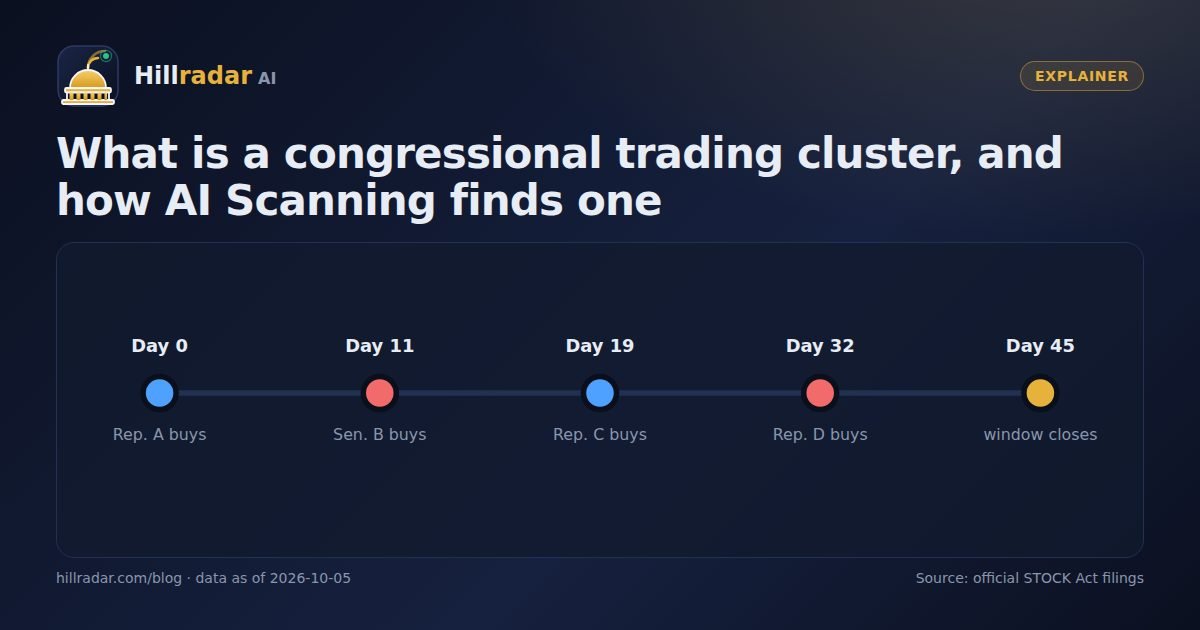
A trading cluster is a group of disclosed purchases of the same company by different members of Congress inside a short window, which Hillradar AI sets at 45 days, the same length as the STOCK Act filing deadline. The idea is borrowed from insider-trading research in the corporate world, where several executives buying at once has long been treated as more informative than one.
How a cluster is scored
Each company in the window gets a score from 0 to 100, built from five ingredients:
- Breadth — how many distinct lawmakers bought, and how recently.
- Bipartisanship — buyers from both parties count for more than a single-party group.
- Track record of the buyers — a purchase by a lawmaker whose past buys beat the market 65% of the time weighs more than one from a 40% record.
- History in that stock — how previous congressional purchases of the same company performed.
- Sell pressure — concurrent sales by other lawmakers lower the score.
Scores of 55 and above are labelled high confidence, 35 to 54 medium, and the rest watch. Every score comes with the list of buyers, the reasons in plain English and, when AI insight is enabled, a short thesis.
What the history shows
We measured every disclosed stock purchase since 2014 with a known six-month outcome, 21,526 trades, against the S&P 500 over the same six months. Taken all together, congressional purchases returned 9.3% over six months on average, essentially identical to the market. Lawmakers as a group are not beating the index.
The picture changes when the rule gets stricter. Purchases that were part of a cluster did somewhat better than the average, and purchases that were part of a cluster and made by lawmakers with strong track records did markedly better in the historical data. The live figures, recomputed from the database, are shown on the Investment Plan page inside the app rather than quoted here, because they move as filings arrive.
What AI Scanning is not
- It is not a recommendation engine; it ranks public records by how unusual they are.
- It does not know why anyone traded; filings contain no reasons.
- It cannot see a trade before it is filed, so every cluster is already weeks old by law.
- It is a research tool for people who want the primary source organised, not a substitute for advice.
Using it well
Start from the cluster, then open the company page and read the individual filings: who bought, in which account, in what band, and how late. Check whether the buyers usually hold that stock. Then compare with your own research. That workflow, record first and conclusions second, is what the tool is designed for. You can also have new clusters sent to Telegram, WhatsApp or email.
Why a 45-day window
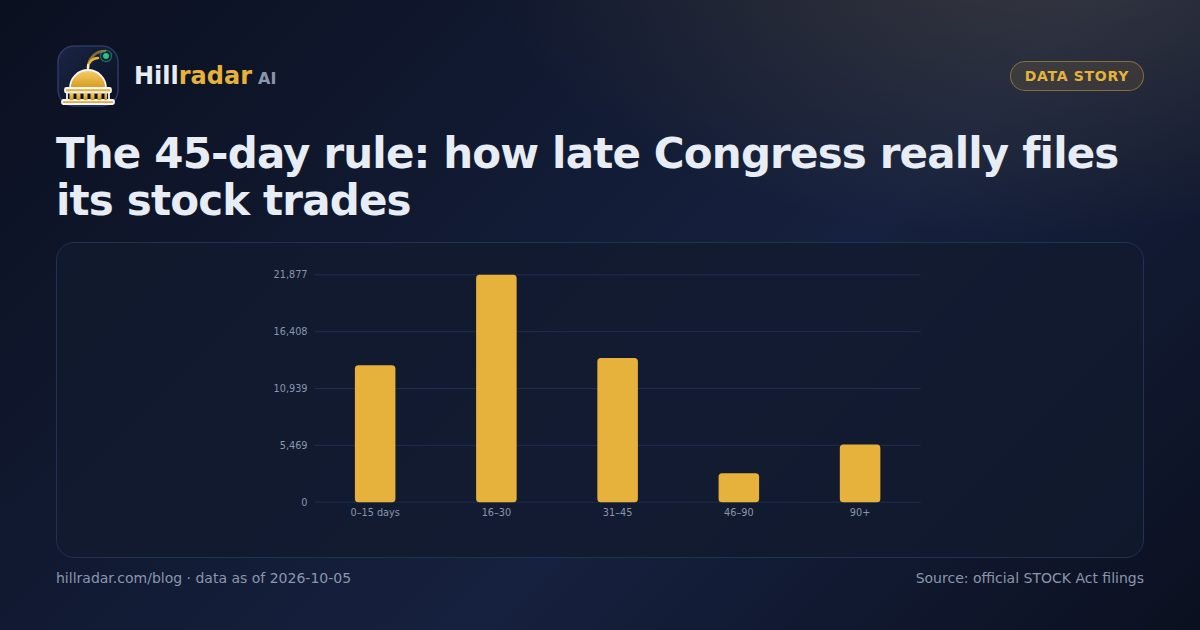
Forty-five days is the STOCK Act's own deadline, so it is the longest gap two trades can have while still being disclosed in the same "generation" of filings. A shorter window, say two weeks, would miss clusters where one member's filing arrived late; a longer one would group unrelated trades. Because the window is applied to transaction dates, not filing dates, a cluster can be detected only once the last filing in it is published, which in practice means two to seven weeks after the first purchase.
What clusters look like in the record
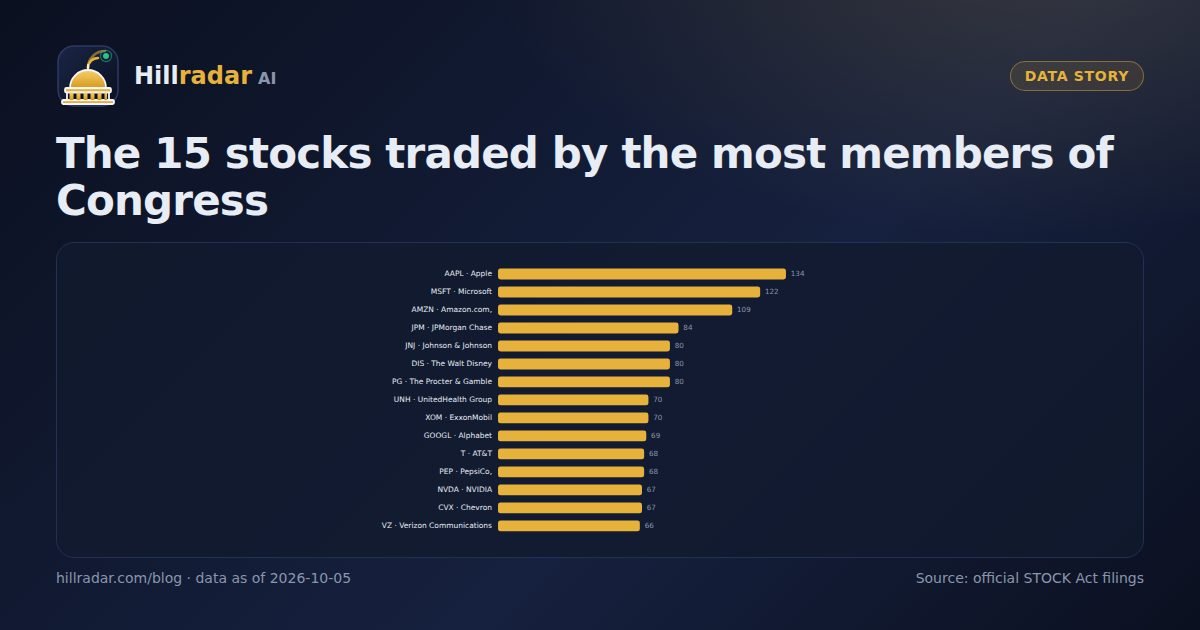
Since January 2025 the stocks bought by the most distinct lawmakers were AAPL (45), MSFT (43), AMZN (33), NVDA (32). Not all of those are clusters in the strict sense, because many of the purchases are spread across months, but the ranking shows where congressional buying concentrates. NVIDIA is the clearest recent example of a company moving from occasional to widespread holding: it ranks 13th in the all-time list by breadth and 4th since 2025. A cluster detector surfaces that kind of shift within weeks rather than after a year-end review.
False positives and how we limit them
- Index rebalancing can make several managed accounts buy the same large-cap on the same day; the track-record weight and the "do these buyers usually hold this" check reduce the score of such clusters.
- Spouse and joint accounts are included (they are part of the disclosure) but shown with their owner code so you can discount them.
- Catch-up filings that disclose months of old trades at once can create a cluster of stale purchases; the freshness term in the score penalises them.
- Thin history: a lawmaker with five trades does not get a track record at all, so one lucky call cannot dominate a score.
Read together with the Disclaimer, the rule is simple: a cluster tells you where to read first, never what to do.
Frequently asked questions
What counts as a cluster?
Two or more different lawmakers filing a purchase in the same company within 45 days of each other. Clusters are stronger when more lawmakers are involved, when both parties are represented, when the filings are recent, and when the buyers have good historical track records.
Is a cluster a buy signal?
No. It is a research flag: an unusual concentration of public disclosures. Hillradar AI scores it, explains the reasons in plain English and shows the back-tested history, and leaves the decision to you or your adviser.
How is a lawmaker's track record measured?
For each disclosed purchase we compare the stock's return over the following six months with the S&P 500 over the same window. The share of purchases that beat the market is the lawmaker's hit rate; it requires a minimum number of trades to be shown.
Hillradar AI republishes public STOCK Act disclosures for research and education. Figures come from the official filings as collected in our database on the date shown; filings can be amended by the filer. Nothing here is investment advice.