The most active stock traders in Congress, ranked by disclosed transactions
A handful of portfolios dominate the congressional trading record. Knowing who they are matters for reading every other statistic about Congress and stocks.
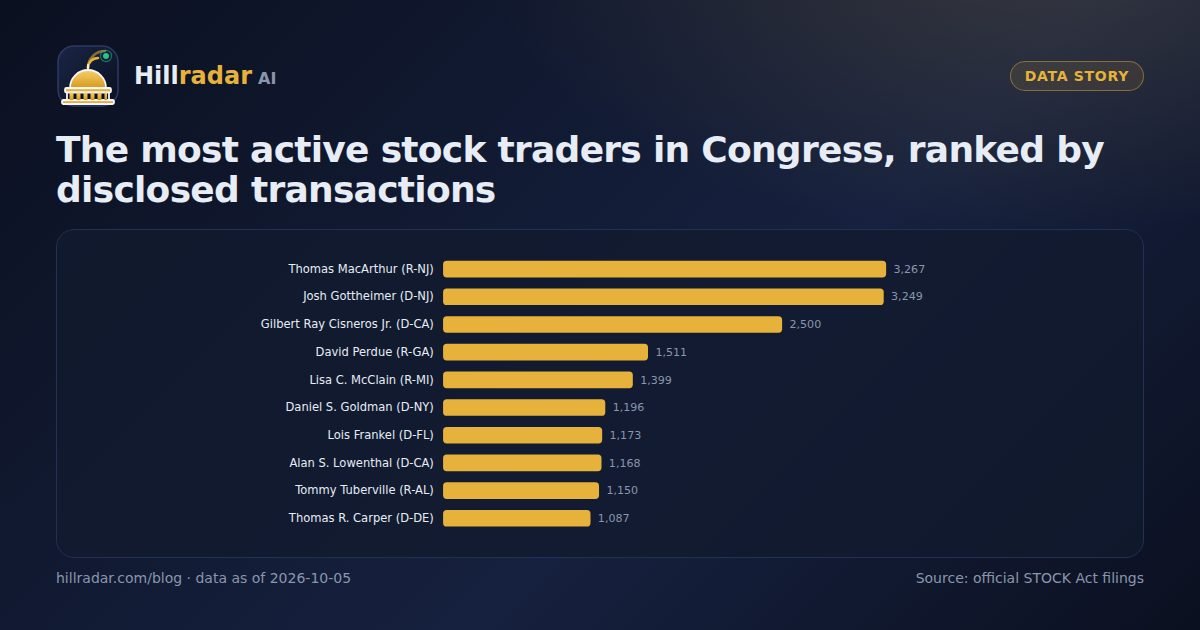
The top ten
| # | Lawmaker | Chamber | Transactions | Buys | Sells | Active |
|---|---|---|---|---|---|---|
| 1 | Rep. Thomas MacArthur Republican, NJ | House | 3,267 | 1,707 | 1,560 | 2015–2019 |
| 2 | Rep. Josh Gottheimer Democrat, NJ | House | 3,249 | 1,361 | 1,888 | 2017–2026 |
| 3 | Rep. Gilbert Ray Cisneros Jr. Democrat, CA | House | 2,500 | 1,456 | 1,044 | 2019–2026 |
| 4 | Sen. David Perdue Republican, GA | Senate | 1,511 | 757 | 754 | 2015–2020 |
| 5 | Rep. Lisa C. McClain Republican, MI | House | 1,399 | 707 | 692 | 2024–2026 |
| 6 | Rep. Daniel S. Goldman Democrat, NY | House | 1,196 | 353 | 843 | 2023–2025 |
| 7 | Rep. Lois Frankel Democrat, FL | House | 1,173 | 548 | 625 | 2014–2023 |
| 8 | Rep. Alan S. Lowenthal Democrat, CA | House | 1,168 | 557 | 611 | 2014–2022 |
| 9 | Sen. Tommy Tuberville Republican, AL | Senate | 1,150 | 486 | 664 | 2021–2026 |
| 10 | Sen. Thomas R. Carper Democrat, DE | Senate | 1,087 | 571 | 516 | 2014–2024 |
How concentrated the record is
The ten lawmakers above filed 17,700 transactions between them, about 31% of everything in the database. The median member of Congress, by contrast, files a few dozen transactions in a whole career, and many file none at all: of 352 lawmakers with any filing since 2014, only 128 disclosed a trade in the last twelve months.
Three kinds of high-volume filer
- The managed portfolio. Hundreds of small transactions, mostly in the $1,001–$15,000 band, often in index-like baskets of large caps, with buys and sells roughly balanced. Thomas MacArthur's 3,267 filings in four years and Lisa McClain's 1,399 since 2024 fit this pattern.
- The steady seller. Sells far outnumber buys, consistent with liquidating holdings acquired before office. Daniel Goldman's record (353 buys, 843 sells) is the clearest example in the top ten.
- The long-tenured trader. Moderate annual volume sustained over a decade, such as Lois Frankel or Alan Lowenthal, whose totals come from longevity rather than intensity.
Where the senators are
Only three senators make the top ten: David Perdue (1,511 transactions, 2015–2020), Tommy Tuberville (1,150) and Thomas Carper (1,087). The Senate record is smaller overall (11,166 transactions) and, as the owner codes show, far more of it sits in spouse and joint accounts than in the House.
- Ten lawmakers produce roughly a third of all congressional trade filings.
- High counts usually indicate managed accounts, not day trading.
- Buy/sell ratio and owner code separate rebalancing from deliberate positioning.
- Only 128 members disclosed any trade in the past 12 months.
Every lawmaker in this table has a live profile on Hillradar AI with their full filing history, most-traded companies and filing delay. Look one up free.
Intensity: transactions per year in office
Raw totals favour long tenures, so it helps to divide by active years. Rep. Thomas MacArthur compressed 3,267 transactions into four years, roughly 817 a year, the highest intensity in the record. Rep. Lisa C. McClain is on a similar pace with 1,399 since early 2024. Rep. Josh Gottheimer has sustained about 338 a year for almost a decade. By contrast Sen. Thomas R. Carper's 1,087 transactions span more than ten years, about 103 a year. Intensity, not the total, is what tells you whether an account is being actively traded today.
What the most active filers trade
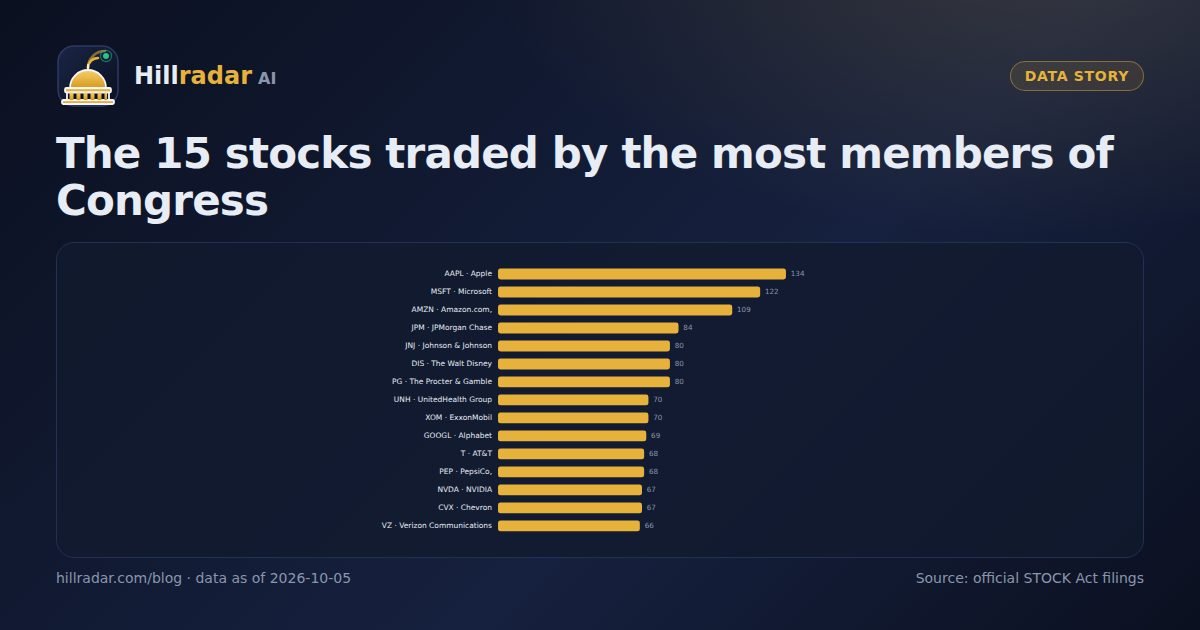
The high-volume portfolios are dominated by the same large-cap names that top the all-Congress list: Apple, Microsoft, Amazon, JPMorgan and the big consumer and healthcare companies. That is expected for managed accounts, which rebalance broad holdings. The exceptions are informative: a member whose record is 95% index-like baskets and then shows a single large purchase in a small-cap company has done something out of character, and that single row is more interesting than the thousands around it. Lawmaker profiles on Hillradar AI list each member's most-traded companies so those outliers are easy to spot.
Former members still shape the data
Four of the ten most active filers have left Congress, including the top name. Their transactions remain in the record because the STOCK Act archive is permanent, and they still influence every all-time statistic: state rankings, party totals, sector mixes. When you want a picture of current congressional trading, filter to the last twelve or twenty-four months, where 128 sitting members account for all activity and the distribution is rather different.
Frequently asked questions
Who has filed the most stock trades in Congress?
Former Rep. Thomas MacArthur (R-NJ) with 3,267 disclosed transactions between 2015 and 2019, narrowly ahead of Rep. Josh Gottheimer (D-NJ) with 3,249, who is still filing.
Does a high transaction count mean a lawmaker is picking stocks?
Not necessarily. Many high-volume filers use professionally managed accounts that rebalance frequently, which generates dozens of small filings. The owner code, the amount bands and the pattern of trades say more than the raw count.
Why do New Jersey lawmakers appear so often?
Two of the three most active filers in the whole record represent New Jersey districts, which is enough to put the state first in total transactions despite a mid-sized delegation.
Hillradar AI republishes public STOCK Act disclosures for research and education. Figures come from the official filings as collected in our database on the date shown; filings can be amended by the filer. Nothing here is investment advice.